
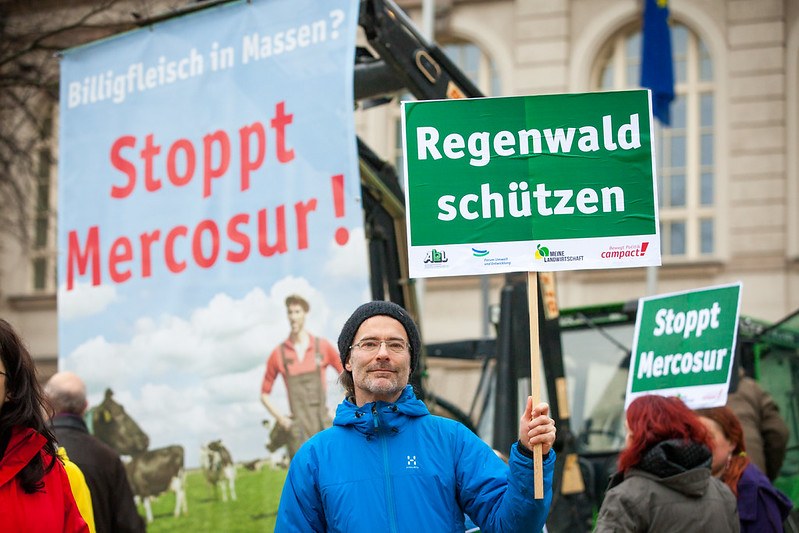
Mercosur Agreement : what is at stake for Alpine pastoralism ?
The EU opened a new competitive market back in May 2026 with four South American countries: Argentina, Brazil, Paraguay and Uruguay. This sparked many heated debates within the EU with France leading the way. Many European stakeholders question the extent to which European markets should open their markets to globalisaton, especially regarding agricultural production and goods. Indeed, the EU has one of the strictest regulations in terms of quality control, pesticides and antibiotics use. Increased competition and diversification but at what cost for the pastoral economy?

Who is CIPRA?
Find out more!
More articles

Wild Ungulates and Society Working Group (WISO) : Interview with Rok Černe
In our Pasto Infomail, we ask questions to differents stakeholders connected in different ways to the topic of pastoralism. This time we had the chance to exchange with Rok Černe, Chair of the Alpine Convention’s Large Carnivores, Wilde Ungulates and Society Working Group (WISO), who leads a project team within the Slovenian Forest Service, specializing in wildlife translocation and human–wildlife coexistence. His expertise and focus on large carnivore conservation led him to play a key role in designing and implementing LIFE, Interreg, and national conservation initiatives, emphasizing large carnivore, ungulate and forest management. He has also contributed to national and international strategies aligning wildlife management with EU directives and best practices. As Chair of the Alpine Convention’s Large Carnivores, Wild Ungulates and Society Working Group (WISO), Rok Černe promotes cross-border collaboration and policy development. Find below his interview !
Michael Gams, CIPRA International
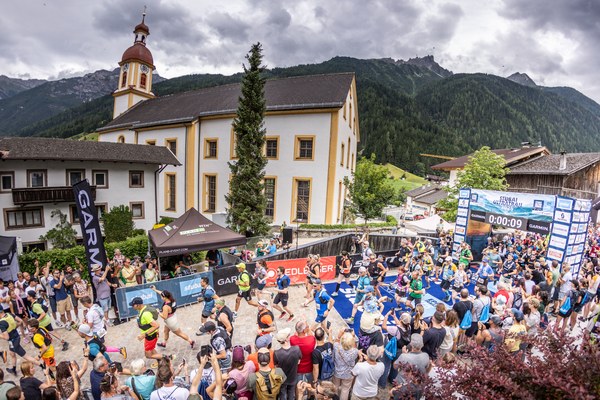
Trail running events in the Alps: how much is too much?
Whether around Mont Blanc, the Zugspitze or the Grossglockner, or through the Dolomites: trail running events are booming across the Alps. At this year’s UTMB alone, around 10,000 runners are expected to take part in various races and categories. However, the sport’s growing popularity also brings with it problems for the natural environment and small mountain communities.
Lauren Mosdale, CIPRA France
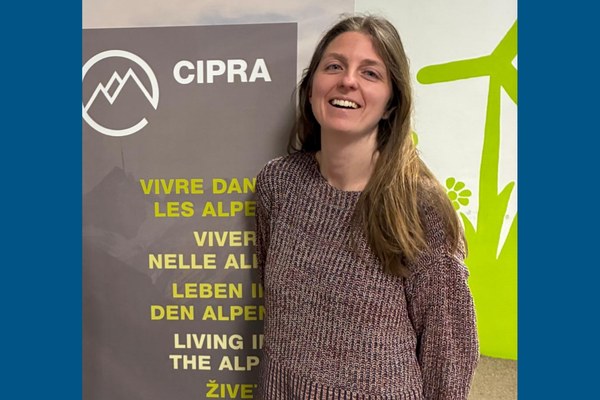
Point of View: What if reaching an agreement isn’t the most important thing?
In the increasingly contested Alpine region, harmonious coexistence does not depend on eliminating conflicts. Rather, we must learn to recognise differing opinions, highlight areas of tension and use dialogue as the basis for a shared future, argues Lauren Mosdale, co-director of CIPRA France.
Laura Haberfellner, CIPRA International Lab
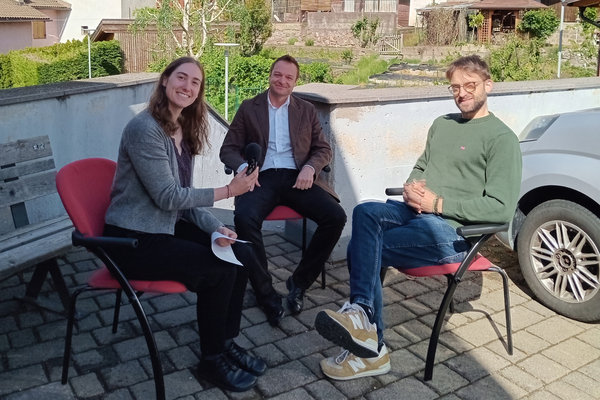
Leaving home, staying connected
Over the course of a year and a half, the OUT4INGOV project focused on the issue of youth migration in the Alps and implemented innovative measures in the three pilot regions of Maribor (Slovenia), Trentino (Italy) and Vesoul (France). The project concluded in mid-July 2026 with a conference in France.
Events
|
Webinar: Too much water, too little water | online | |
|
SmartAlps Webinaire Cybersécurité pour communes | ||
|
Symposium 2: Vernacular Buildings in the Anthropocene | Austrian Academy of Sciences, Vienna (Austria) | |
|
Séminaire transfontalier : Construire l’espace franco-italien de la jeunesse : mobilité, engagement et coopération | Mercure Hôtel Antibes Sophia Antipolis – Rue Albert Caquot, 06560 Valbonne |
Projects
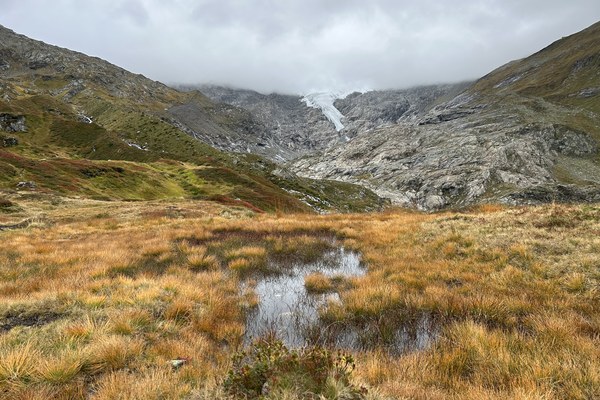
AfterAlpineIce
What will the Alps look like without ice and glaciers? The climate crisis is accelerating glacier retreat and fundamentally transforming the Alpine region. What may at first appear to be a change in the landscape has far-reaching consequences: ecosystems and water cycles are being disrupted, soil development is changing, local climates are shifting, and natural processes in high mountain areas are being permanently affected.
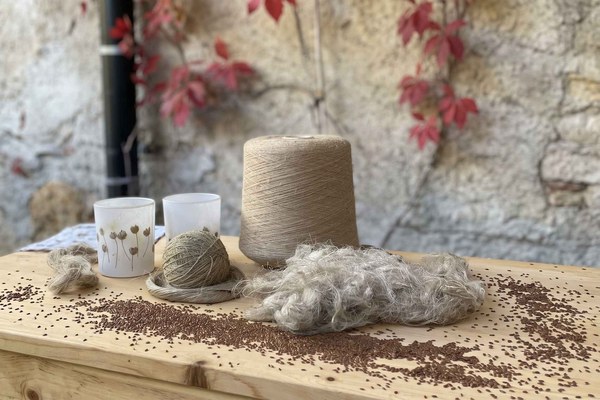
WISER
The Alps have a rich heritage of using and processing local natural fibres, such as wool, hemp, flax and silk. Yet much of this potential remains untapped today: regional processing infrastructure has largely disappeared, traditional knowledge is being lost, and much of the value creation takes place outside the Alpine region. At the same time, the textile industry is seeing growing demand for sustainable and circular alternatives.
CIPRA International
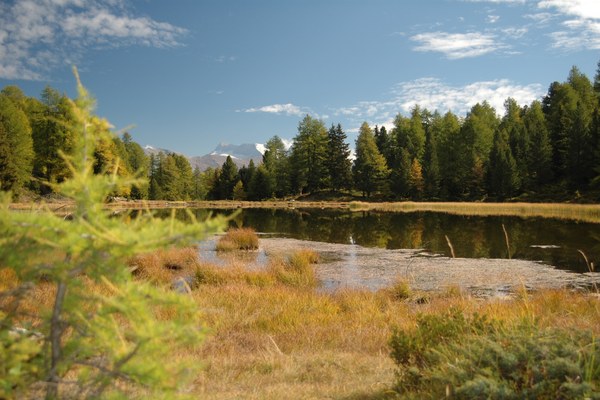
RE-PEAT-it!
Peatlands provide valuable ecosystem functions in the Alps, but drainage, intensive land use and the climate crisis are placing them under growing pressure. The RE-PEAT-it! project strengthens knowledge, cooperation, and the capacity to act on peatland conservation across the Alpine region.