Trail running events in the Alps: how much is too much?
Whether around Mont Blanc, the Zugspitze or the Grossglockner, or through the Dolomites: trail running events are booming across the Alps. At this year’s UTMB alone, around 10,000 runners are expected to take part in various races and categories. However, the sport’s growing popularity also brings with it problems for the natural environment and small mountain communities.
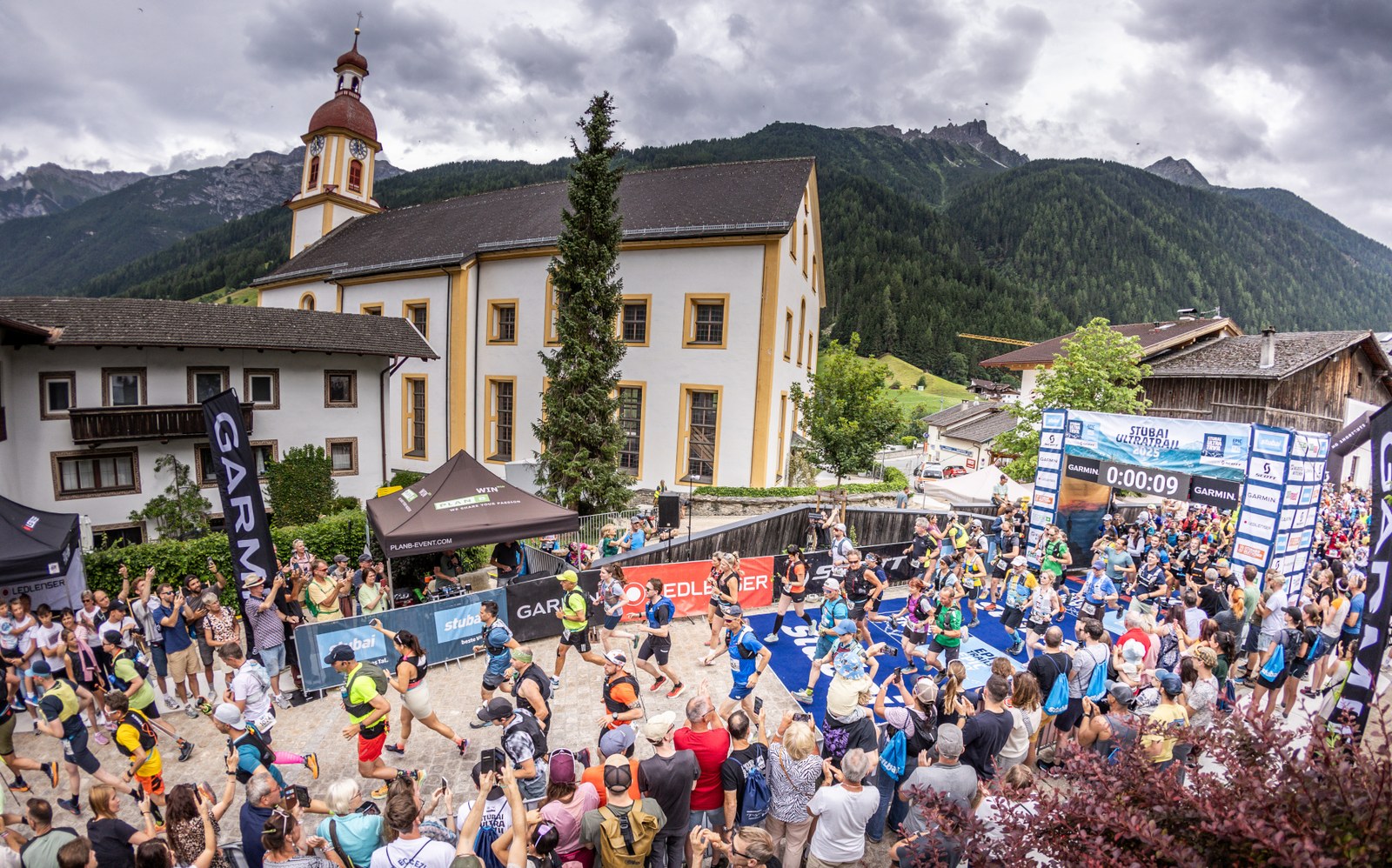
On average, one person generates 1.6 tonnes of CO₂ when taking part in the world’s most famous ultra-trail running event in Chamonix. “Trail running is attracting more and more people and giving many the chance to experience nature. At the same time, this growth is placing new strains on areas that are often already under significant human pressure”, explains Laura Moro. She is a scientist, a trail runner and the newly elected Vice-President of Mountain Wilderness International, a long-standing member organisation of CIPRA that operates in several Alpine countries. In her view, the most significant environmental impacts include carbon emissions from participants’ journeys, soil erosion on heavily used trails, and the disturbance of wildlife, particularly during night-time runs: “Wildlife is used to hikers during the day, but not to hundreds of people wearing headlamps at night”.
Flying in order to run
The races often take place in small mountain villages and bring with them additional traffic, noise and large numbers of visitors. Some people travel halfway around the world by plane to take part, yet not everyone benefits from the activities. “Local people should not just be involved as volunteers, but should be consulted from the outset when planning such events”, emphasises Laura Moro. Many organisers are already focusing on waste reduction or encouraging travel by public transport, yet she sees a need for further action: “The aim should not be to maximise the number of participants, but to maximise their satisfaction and that of the local population, while minimising the environmental impact”. Those who mostly take part in races in their own region identify more strongly with the area, are more likely to get involved in the community and cause fewer emissions from travelling to the event, says Moro. “In the past, many people took up trail running through hiking or mountaineering. Today, some switch straight from the gym or road running to the trails”, she adds. This makes it all the more important to share knowledge about wildlife, sensitive habitats, and respectful behaviour in the mountains. Trail running events could play a key role in this, not only by promoting sporting achievement, but also by strengthening understanding of the Alps as a habitat.
Podcast interview with Laura Moro:
Sources and further information:
https://www.mdpi.com/1660-4601/21/1/97 (en), https://www.ouest-france.fr/sport/running/trail/un-utmb-reserve-aux-parisiens-apres-lannonce-du-plan-de-decarbonation-la-polemique-enfle-2fec53c2-eb04-11f0-a887-2a4cc40b8e21 (fr), https://www.runnersworld.de/ausruestung/nachhaltigkeit-im-trailrunning-umweltvertraeglich-laufen/ (de), https://onlinelibrary.wiley.com/doi/abs/10.1002/ldr.2863 (en), https://bornonthetrail.substack.com/p/the-environmental-impact-of-trail-running-and-hiking (en), https://montblanc.utmb.world/impact-report (en)
Further information
Milano-Cortina 2026: Fair play? Not a chance!