
AfterAlpineIce
What will the Alps look like without ice and glaciers? The climate crisis is accelerating glacier retreat and fundamentally transforming the Alpine region. What may at first appear to be a change in the landscape has far-reaching consequences: ecosystems and water cycles are being disrupted, soil development is changing, local climates are shifting, and natural processes in high mountain areas are being permanently affected.
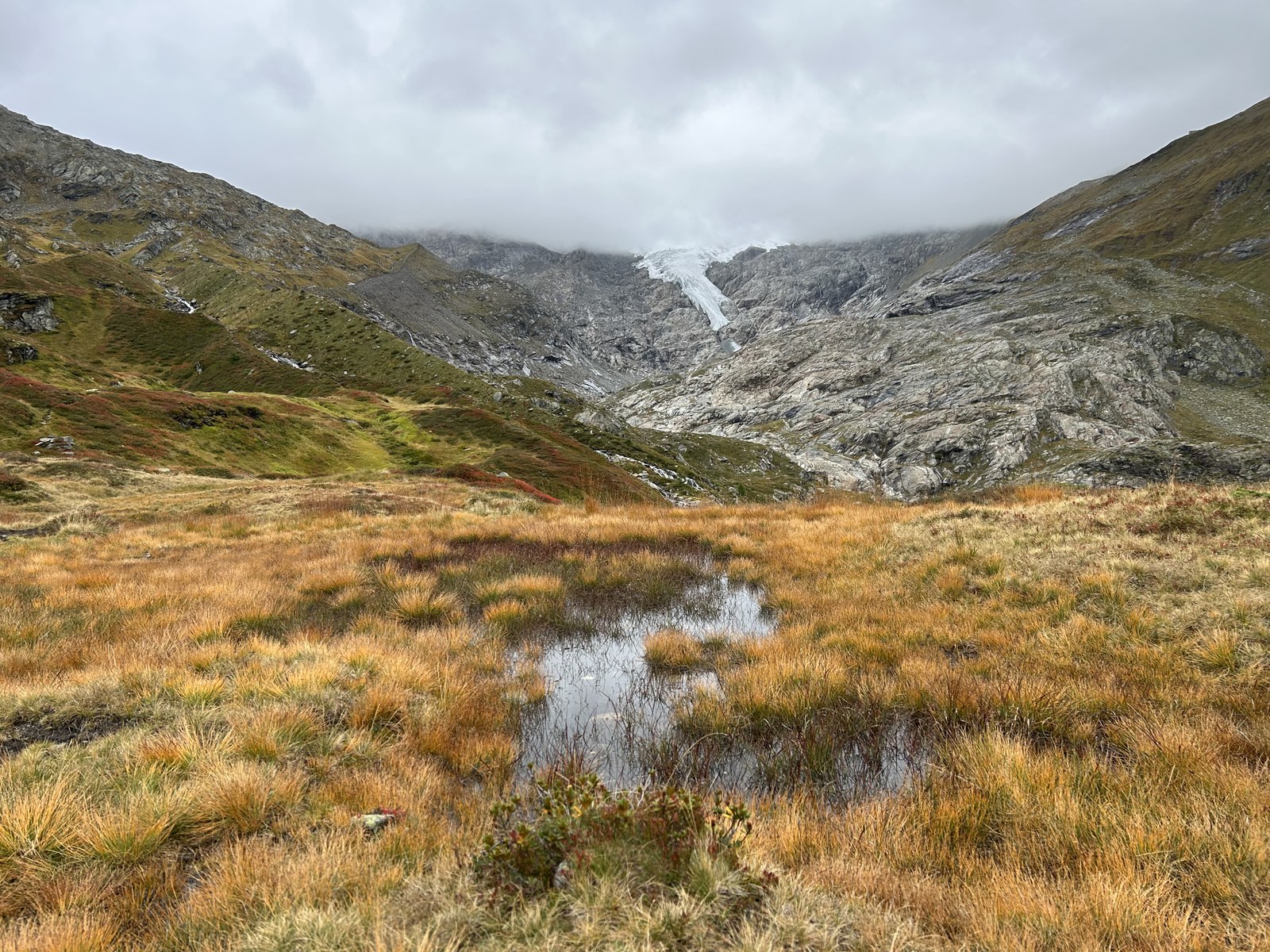
As glaciers retreat, new ice-free areas emerge where plants, animals and entire ecosystems can establish themselves. These newly emerging habitats present major challenges for nature conservation and protected area management. To develop appropriate solutions, it is essential to understand how these ecosystems are changing and what the consequences of glacier retreat are for both people and nature.
This is where the AfterAlpineIce project comes in. It brings together experts from different disciplines to better understand these changes and identify practical solutions. The project examines the impacts of glacier retreat on newly ice-free areas and the ecosystems that emerge there. Based on these findings, innovative management approaches and concrete conservation measures are developed to protect these dynamic landscapes. In addition, the project creates information and communication tools for visitors, mountaineers and local communities, encouraging responsible behavior in the face of changing environmental conditions. The approaches developed within the project will be tested in selected pilot regions, creating practical solutions that can be transferred to other Alpine regions.
The project aims to support Alpine protected areas in identifying the impacts of glacier retreat at an early stage, conserving newly emerging ecosystems and developing forward-looking management approaches.
Project partners:
ALPARC – The Alpine Network of Protected Areas; Haute-Savoie Natural Spaces Conservatory; French Nature Reserves; Berchtesgaden National Park Administration; Nature park Julian Prealps; Adamello Brenta Nature Park Geopark; Gran Paradiso National Park; Association of the secretariat of the Hohe Tauern National Park Council; Triglav National Park; Swiss Federal Institute for Forest, Snow and Landscape Research WSL; Foundation UNESCO World Heritage Swiss Alps Jungfrau-Aletsch
Countries:
France, Germany, Italy, Austria, Slovenia and Switzerland.
Objectives:
- Improve understanding of glacier retreat and its impacts on Alpine ecosystems
- Develop an integrated post-glacial adaptation strategy and conservation measures for newly ice-free areas and emerging ecosystems
- Raise awareness of changing Alpine landscapes and support the safety of visitors, outdoor practitioners and local communities
Activities:
- Analysis of conservation, monitoring and management requirements for newly ice- and permafrost-free areas and newly emerged ecosystems.
- Develop and implement an Alpine Action Plan with concrete measures for monitoring and managing newly ice- and permafrost-free areas, including the contribution to an early warning system for biodiversity
- Identify key communication needs and challenges related to glacier and permafrost retreat.
- Develop and implement a targeted communication plan to address these challenges and improve awareness among relevant stakeholders.
Target groups:
- Alpine Protected Area Managers
- Alpine glaciers visitors, outdoor practitioners and local alpine population
- Public authorities
Duration:
September 2026 – August 2029
Project languages:
English and Alpine languages
Funding amount:
€2,882,706.25
Co-financing amount (ERDF): € 2,008,047.18
Funding:
The project is part of the Interreg Alpine Space Program. The Interreg Alpine Space Program co-finances and supports cooperation projects across the borders of seven Alpine countries.

Further information:
AfterAlpineIce – Alpine Space Programme
Related contacts

Paula Duske
Authorised signatory