Point of View: Facts are non-negotiable
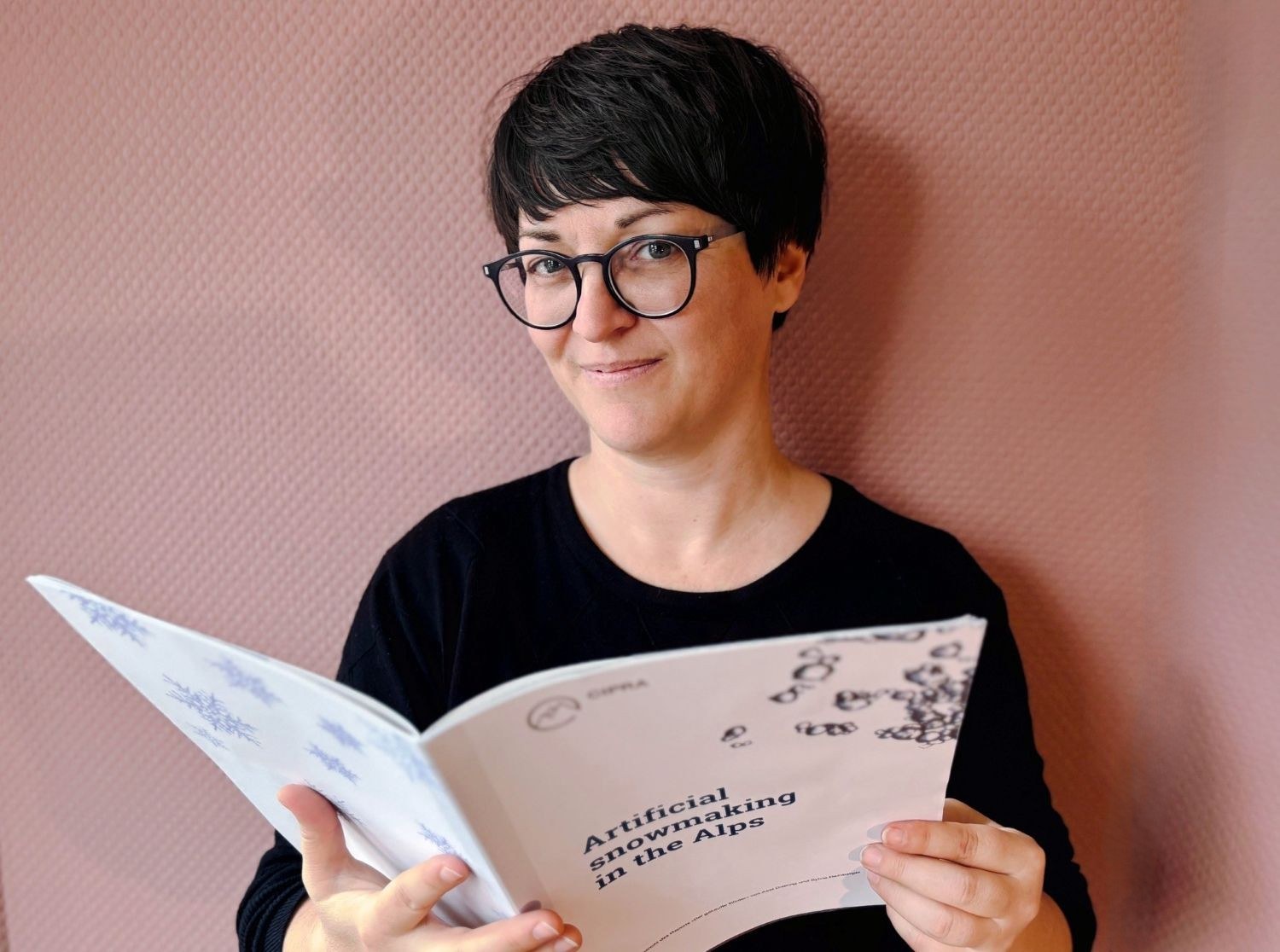
When myths and facts stand side by side, it can be difficult to know where to turn. Caroline Begle, Communications Officer at CIPRA International, explains why thorough research is essential, particularly in climate communication, and why the new CIPRA report on artificial snowmaking dispels common misconceptions.
Last week I came across a statement that made me pause: there was talk of “sustainable snowmaking technology” and that artificial snow was “cleaner than nature”. We encounter claims like these – and many more – every day. They sound plausible, are shared thousands of times, and they stick in our minds. Whether they are true or not is beside the point. Particularly on social media and through AI-generated content, the boundaries between credible information, opinion, advertising and misinformation are becoming increasingly blurred. In an age of disinformation, careful research, transparent sourcing and reliable reporting are more important than ever.
When we communicate about the climate crisis, we bear a responsibility. The issue is complex and scientific understanding is constantly evolving. This makes it all the more important to verify claims, rather than repeating them uncritically. This is also evident when it comes to artificial snowmaking: a widely held assumption, for example, is that no drinking water is used for this purpose. In fact, around 30 per cent of the water used for snowmaking comes from drinking water networks or groundwater. Following the extremely dry summer of 2026, it has become clear just how problematic such spurious arguments are. That is why we invest a great deal of time in research and fact-checking. Our new CIPRA report on snowmaking brings together knowledge from across the Alpine region and transparently categorises myths, vested interests and scientific findings. In this way, we aim to contribute to the formation of informed opinions.
Disinformation will continue to be a part of our lives – it is on the rise thanks to the use of artificial intelligence and the ever-increasing speed of digital communication. This makes it all the more important for the media, organisations and individuals to look and listen closely, to disclose their sources and to distinguish facts from claims. For me, this is one of our most important tasks: not to be as loud as possible, but as reliable as possible. Because good decisions require robust facts.
The report “Artificial Snowmaking in the Alps” is now available online here.
Further information
Artificial snow and the climate crisis