Exploring soil with every one of our senses
How is fertile soil formed? How big is a grain of sand? And how can knowledge about soil be conveyed creatively? The partners of the Erasmus+ project “Future Soil Literacy” addressed these questions at a meeting held in late September in Vorarlberg, Austria, and Liechtenstein.
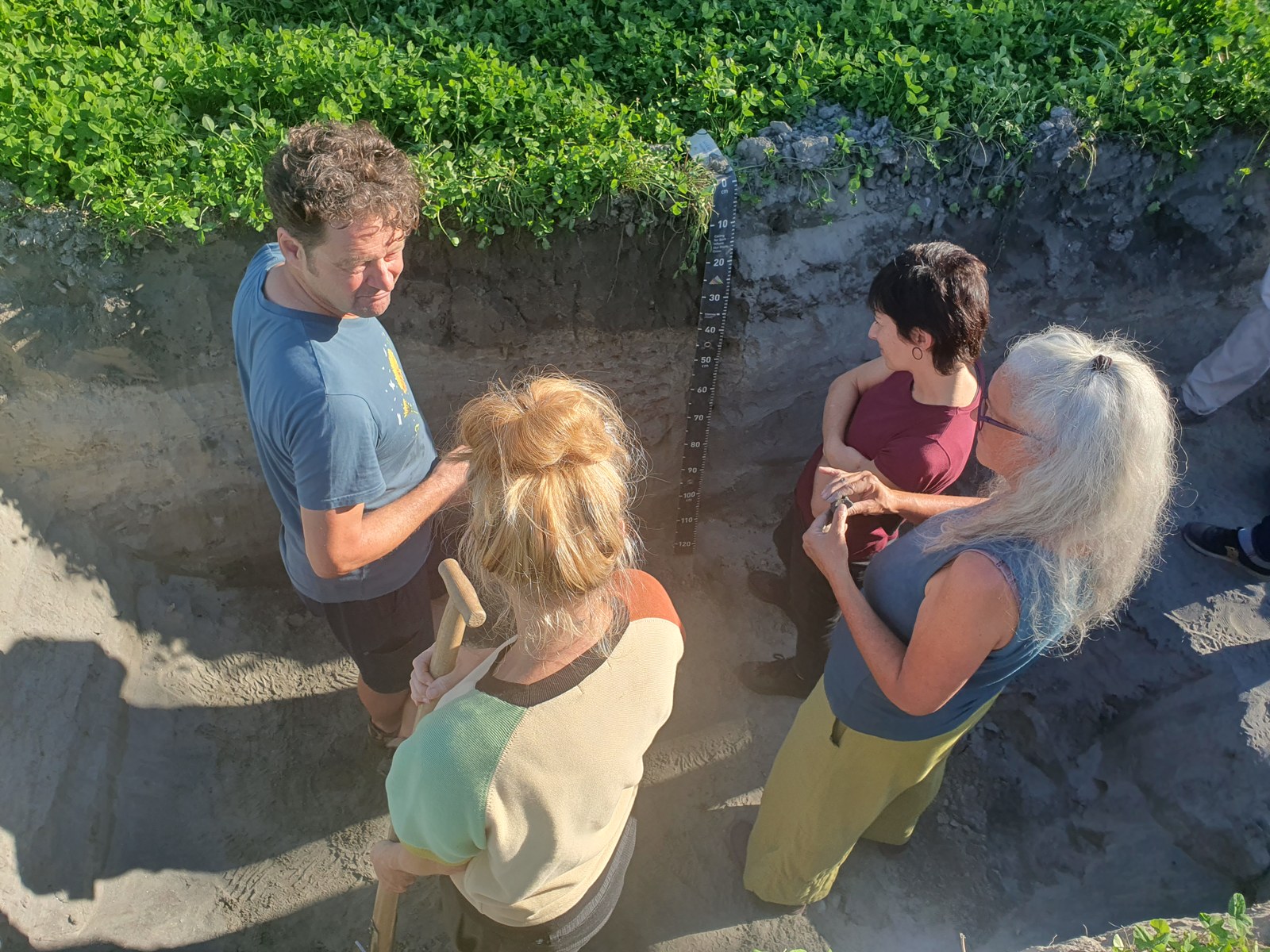
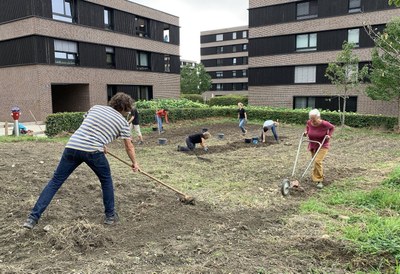
It takes between 100 and 300 years for one centimetre of soil to form. At up to two millimetres in size, sand is one of the largest soil particles and allows water to seep away quickly. At the “Future Soil Literacy” project meeting, representatives from the Bodenfreiheit association shared basic knowledge about soil. They demonstrated how the subject is taught in Vorarlberg in a practical and creative way, for example through workshops or joint soil-unsealing initiatives in public spaces. In the afternoon, the group headed out into the field: participants were able to explore the different soil layers in a soil profile at the edge of a vegetable patch, where clover grows as a cover crop.
The second day kicked off with a “soil museum”. Participants collected roots, stones, or compost and explained their connection to them. They then engaged with soil-related topics in a participatory and creative way, guided by the Italian organisation Stranaidea. The exercises encouraged them to consciously observe their surroundings and reflect on changes. The insights from the workshop are now being incorporated into a training module on soil knowledge and awareness, which will be freely available to all interested parties once the project concludes. “The meeting demonstrated once again just how multifaceted the topic of soil is and how engaging it can be to share knowledge about it”, emphasises project manager Marion Ebster of CIPRA International. “This is important because, although soil lies right under our feet, it is often overlooked.”
Further information