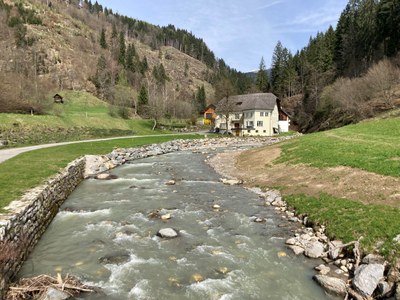
Combining flood protection and nature-based solutions
In the FLOW-BIOS project, five biosphere reserves are working together with the University of Natural Resources and Life Sciences, Vienna, and CIPRA International to explore how nature-based solutions can be successfully implemented on privately owned land.
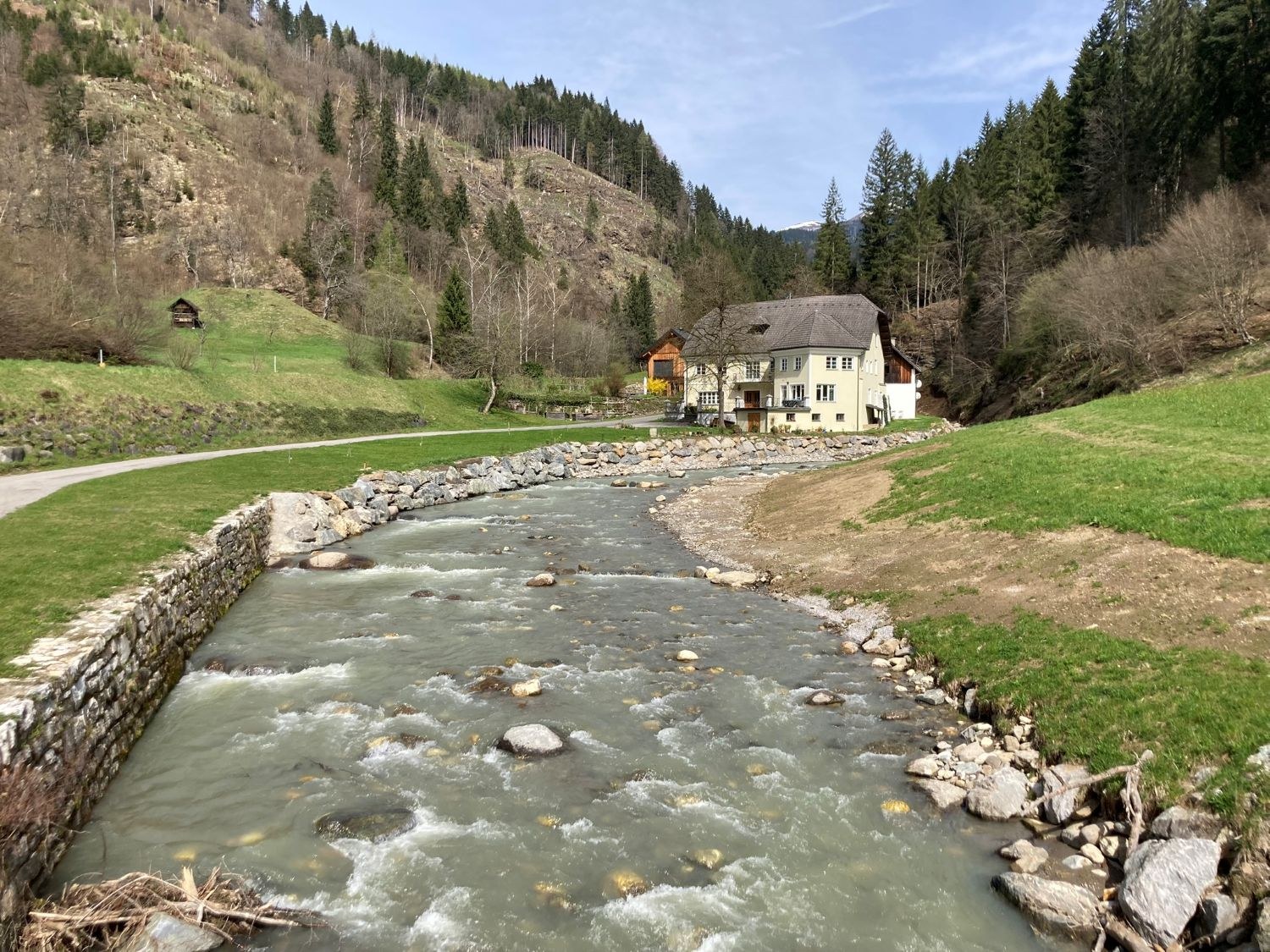
Rivers need more space, retention areas must be secured, and water should be stored where it falls: near-natural flood protection works very well in practice, but it often fails owing to issues of land ownership. This is where FLOW-BIOS comes in, as one of the few projects in which all four Austrian biosphere reserves are involved: Wienerwald, Salzburger Lungau & Kärntner Nockberge, Murtal, and Grosses Walsertal. The UNESCO Biosfera Engiadina Val Müstair in Switzerland is also involved. The biosphere reserves have recognised that they too can play a role in flood protection. Through FLOW-BIOS, they are building on the collaboration in this area that began in the predecessor project, MultiBios. Much of the land required for effective flood protection is privately owned. This gives rise to conflicts between flood protection, ecology and agricultural use, economic considerations and risk prevention. “In FLOW-BIOS, we are working to highlight these areas of tension and find ways to reconcile flood protection with nature-based solutions – for example, through incentives, partnerships and fair contractual agreements”, explains Wolfgang Pfefferkorn, project manager at CIPRA International. To this end, he is organising four co-creation workshops together with the project partners, two of which will take place on site in the biosphere reserves and will be combined with field trips. The research findings will also be disseminated via local media, scientific publications and presentations.
Further information