Legal dispute over Alpine transit: environmental organisations fear a domino effect
On 21 April 2026, the European Court of Justice (ECJ) in Luxembourg will hear Italy’s transit case against Austria. It must decide which takes precedence: the free movement of goods, or the protection of people and the environment. In an open letter, 67 environmental organisations are calling for the transit restrictions and air quality measures on the Brenner route to be maintained.
The oral hearing, originally scheduled for December 2025, is eagerly awaited: the ECJ will decide whether the traffic-regulating measures in Tyrol violate the right to the free movement of goods and must therefore be lifted. In an open letter published at the start of the year, addressed to EU Commissioner Apostolos Tzitzikostas and the transport ministers of the Alpine countries, 67 organisations, led by CIPRA International, warned of a domino effect should the ruling go in favour of the Italian plaintiffs: protective measures for people and the environment along other Alpine transit routes could then also be lifted or not be introduced at all in future. Road freight transport would thus be given priority, putting more environmentally friendly modes of transport such as rail at a disadvantage. The objectives of EU environmental policy – to preserve and protect the environment, as well as to safeguard human health – would thereby be permanently undermined. Future traffic management measures designed to protect people and the environment could fail owing to the principle of the free movement of goods.
Back to a common transport policy
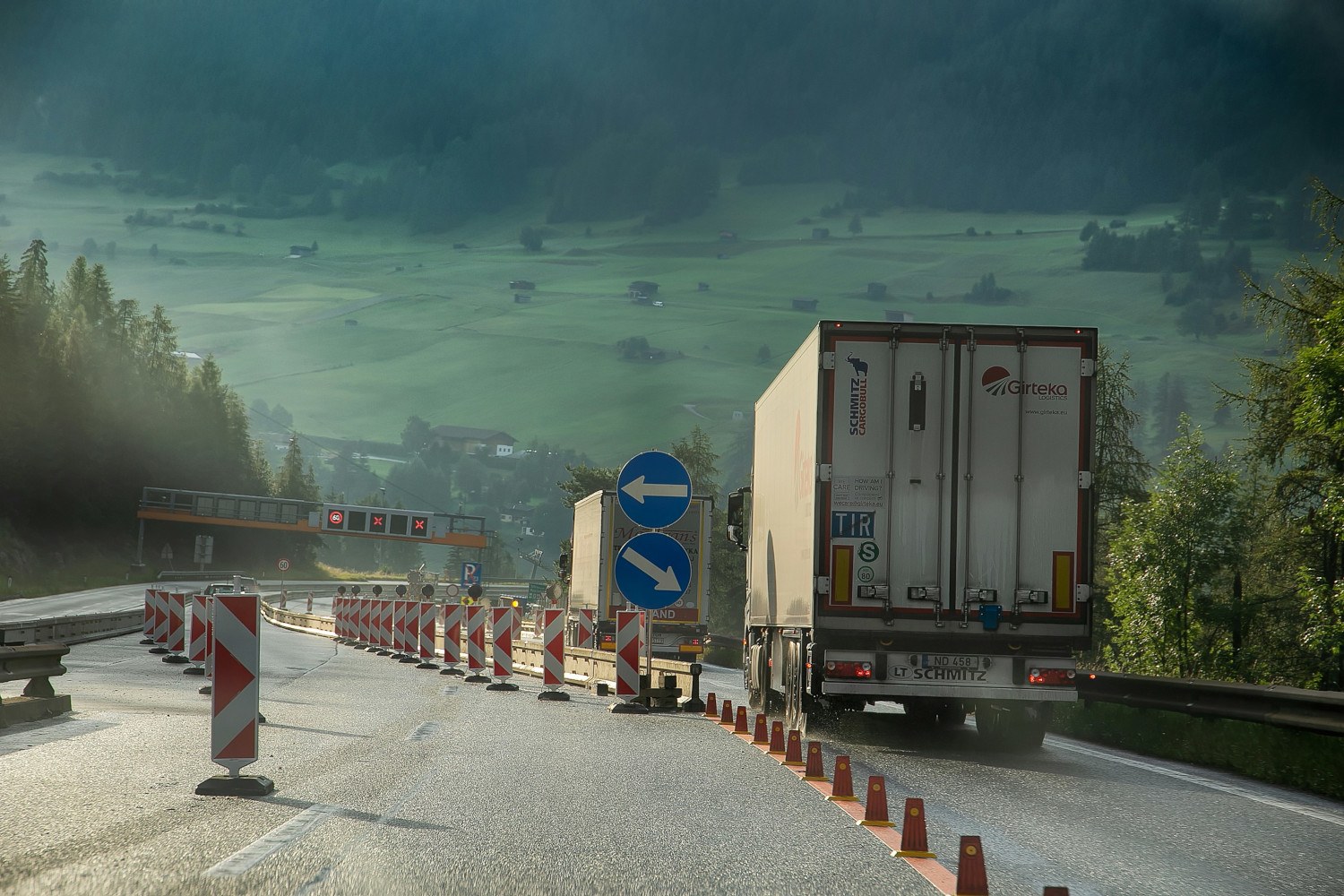
In 2025, 2.4 million lorries crossed the Brenner Pass between Austria and Italy – more than on any other transalpine motorway. The enormous volume of lorries leads to frequent traffic jams, noise pollution and environmental impacts for local residents. Urgently needed bridge renovations further exacerbate the situation. With night-time and weekend driving bans, sectoral driving bans and similar measures, the Austrian province of Tyrol is attempting to curb climate- and environment-damaging detour traffic. In 2024, Italy filed a lawsuit against these measures before the European Court of Justice, arguing that they restrict the free movement of goods. Regardless of the ECJ’s decision, expected by the end of 2026, it is high time to re-establish a cross-border transport policy, says Uwe Roth, President of CIPRA International: “We call on the transport ministers of the Alpine countries to work together to find sustainable solutions that take into account the people living along the Alpine transit routes, reduce the burden on the environment and shift freight transport from road to rail.”
Further statements on transit traffic in the Alpine region:
“If the principle were to prevail that the free movement of goods takes precedence over people’s health and environmental protection, this would be a serious blow to the whole of Europe, not just the regions along the Brenner axis.”
Francesco Pastorelli, Director of CIPRA Italy
“The case brought before the European Court of Justice highlights once again how urgently a coordinated European solution for transalpine transport is needed. The ruling in the infringement proceedings will set the tone for how a sustainable transport policy in line with the Transport Protocol of the Alpine Convention is shaped in future – in Austria and across the entire Alpine region.”
Stephan Tischler, Chair of CIPRA Austria and transport researcher at the University of Innsbruck
“A repeal of the existing measures to curb excessive transit traffic via the Brenner axis would send a disastrous signal in favour of unrestricted goods traffic across Europe. However, the transalpine road routes on all Alpine transit corridors would be particularly affected.”
Elisabeth Ladinser, President of the South Tyrolean Umbrella Organisation for Nature and Environmental Protection / CIPRA South Tyrol
“Along the north-south transit axis at the Brenner, we need more, not fewer, effective measures to correct the distorted competition between road and rail. This is the only way to effectively protect people and sensitive Alpine ecosystems from excessive road traffic.”
Katrin Dorfschmid, Director of Pro Alps Switzerland
“Year after year, transit traffic across the Alps reaches new peaks. Switzerland knows this pressure well; what we need is a disruptive shift towards sustainable mobility, not an ECJ ruling that locks Alpine regions into inaction.”
Manuel Herrmann, Director of CIPRA Switzerland
“The legal dispute between Austria and Italy sets a precedent for traffic regulation on the major Alpine transport routes. In the Western Alps between Italy and France, the majority of lorries travel through the Fréjus Tunnel. By doubling its capacity, this road tunnel violates the Alpine Convention. We need a coordinated approach to traffic management across the Alps.”
Alain Boulogne, Vice-President of CIPRA France
“The reduction of cross-border traffic, particularly road traffic, appears to be a key objective of a policy dedicated to environmental protection and safeguarding public health. It is imperative to do everything possible to transfer at least the movement of goods to rail.”
Piero Belletti, Secretary General, Pro Natura Italy
“The abolition of the night-time ban on lorries, sectoral bans and other existing transit restrictions at the Brenner Pass would contradict both the objectives of the Alpine Convention and the EU’s goal of shifting freight transport to rail.”
Gerhard Unterweger, Stop Transit Initiative – East Tyrol
Enquiries should be directed to:
Paul Kuncio, CIPRA International (Policy Officer), +423 2375310,paul.kuncio@cipra.org
Michael Gams, CIPRA International (Communications), +423 2375304, michael.gams@cipra.org
Further information