
Positions
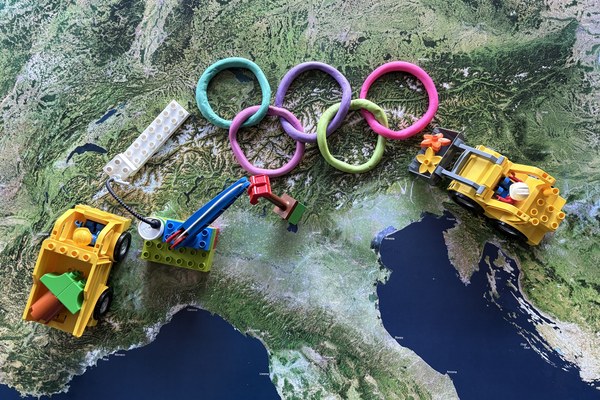
Winter Olympics: the Alps are more than just a playground
Major, global sports events have the power to fascinate and inspire. Winter sports hold a special place in the Alps, with their deep-rooted tradition and passionate following. We however believe that, as they currently stand, the Winter Olympic Games are neither environmentally nor socially acceptable. Despite promises of reform, recent developments such as the preparations for Milano-Cortina 2026 and the 2030 Games in France, as well as the “privileged candidacy” of Switzerland for the Winter Games 2038, all prove that the Olympic model remains unsustainable. In recent decades, referendums (e.g. in Innsbruck, Sion, Munich, Grisons) have several times demonstrated that large segments of the population are no longer willing to pay the price of the Winter Olympics.
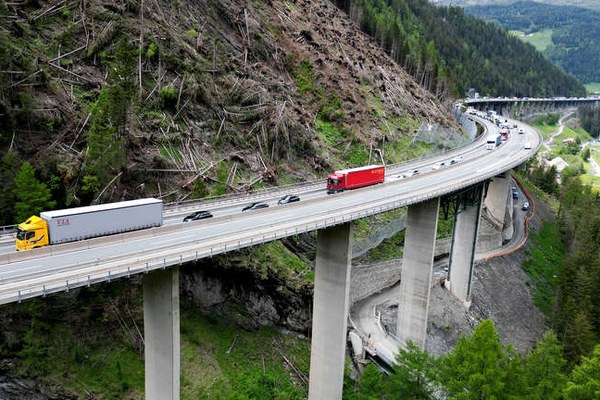
Open Letter: Protect the Alps from Excessive Transit Traffic
The Alpine region is under increasing pressure — from the climate crisis, air pollution, and ever-growing traffic volumes. Numerous organisations, led by CIPRA International, have therefore addressed an open letter to Commissioner Apostolos Tzitzikostas and the transport ministers of the Alpine countries.

Position: Transport and mobility in the Alps
In its new 40-page position paper, CIPRA outlines sustainable mobility in the Alpine region with the least possible negative impact of transport on the environment and people. In addition to travel, the paper also addresses commuter traffic, long-distance traffic and freight transport - supplemented with facts, concrete measures and good examples.
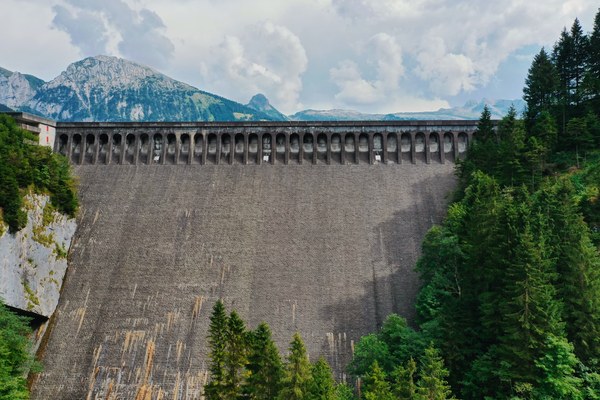
Hydropower in the Alps
How much hydropower use is environmentally compatible and ecologically sustainable? This question has been on the minds of people in the Alpine region for decades - all the more so against the backdrop of the urgent need to move away from fossil fuels. There are currently around 21,000 hydropower plants in operation in Europe, 300 under construction and over 8,500 in the planning stage. In many places, climate change with its imponderables such as extreme floods is being countered with more dams and walls, although river widening, for example, would make more ecological sense.
Alpine landscape is not renewable!
Landscape is a key to negotiating social and political issues. CIPRA has taken up these issues as part of its Alpine-wide priority theme “Landscape” 2019-2020. This position paper, which was developed in a broad and participatory process with CIPRA representatives, young Alpine women and experts from all Alpine countries, is the conclusion of this priority theme.

Solstice in winter tourism
Tourism has brought wealth to the Alps. In many regions it remains an important source of income, but lack of economic diversification is also a risk. The importance and orientation of tourism differs strongly among Alpine countries, but all of them need new strategies and approaches to cope with shifts in visitor behaviour and climate change. A socio-economic transformation is needed that takes account of tourism’s past, present and future potential.
Transport sufficiency: Towards a new sustainable mobility culture
CIPRA Position on the mobility of goods and people in the Alps
Appeal: Climate change mitigation now!
An appeal from the Alpine municipalities and their inhabitants to the participants of COP 21
Alpine rivers are not renewable
Towards a fully sustainable energy strategy in the Alps
New solidarity between the Alps and surrounding areas. CIPRA position paper on a European Macro-Region Strategy for the Alps
Various political actors in the Alpine space are pushing for a European strategy for a macro-region for the Alps (MRS Alps). The International Alpine Protection Commission CIPRA, with over one hundred member organisations, possesses a wide-ranging network in all Alpine countries that extends beyond the Alps and into the surrounding metropolitan areas. CIPRA is therefore actively joining the process for a Macro-Regional Strategy for the Alps, representing the interests of sustainable, eco-friendly Alpine policies. Strengthened co-operation in such a MRS Alps must take place with the Alpine regions and surrounding areas as equal partners without undermining the achievements of the Alpine Convention.
Healthy, natural forests: responding to climate change! cc.alps: CIPRA's demands for forest management
As forestry measures have long-term effects, adaptation of the forests to new climate conditions is urgently needed - but it should be initiated with great caution. The carbon storage ability of forests has to be exploited. Wood should first be used as a raw and building material; only under certain circumstances it should be used for heating. Short regional exploitation cycles are to be created. Natural forests should be fostered as they are more resilient to climate change. Forest owners who in the interest of climate protection give up part of their earnings should be compensated. Finally targeted research into practical climate adaptation measures has to become an important long-term task.

Improvements in efficiency instead of damage to the environment! cc.alps: CIPRA's demands on the subject of water
The rivers of the Alps provide 170 million people with water. Climate change will greatly reduce the availability of water in the Alps and beyond, with less rain, longer dry periods in summer and greatly reduced snowfalls in winter among the predicted consequences. The demands made of this natural resource will increase accordingly, as will competition between the various user groups. Today only about 10% of the rivers and streams of the Alps can be considered ecologically intact, i.e. they are neither polluted nor over-engineered nor compromised in terms of their flow regimes. The ecological quality of waterways and related habitats therefore calls for improvement, not further impairment. We cannot permit the last rivers to become engineered structures or depleted by the excessive abstraction of water.
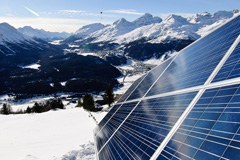
Make the Alps energy self-sufficient! CIPRA-demands - Energy self-sufficient regions
Not having to depend on energy imports: this vision holds great fascination for many regions. Self-sufficiency is "in." There are already many very positive approaches and examples of attempts to go down this road. At the heart of all the concepts is the idea of meeting demand through regional renewable sources of energy, saving energy and using energy more efficiently. Anyone who systematically takes this approach in an attempt to create an energy self-sufficient region changes the face of their region and its structures - to the benefit of their own economy, society and the environment.
cc.alps: CIPRA's demands for agriculture
The agricultural sector is directly affected by climate change impacts but it also contributes to the release of greenhouse gases (GHG) and rising concentrations of GHG in the atmosphere. A sustainable climate response strategy in the field of agriculture involves anticipating, planning and long-term thinking from farm level to transnational level. Prominent fields of activity are sustainable land and soil management, sustainable water management, managing manure and soil carbon as well as organic agriculture as an overall strategy. As agriculture is a highly subsidized economic sector, subvention policy can be used as a lever to guide the sector to sustainability and climate neutrality.
Only climate-friendly tourism is sustainable: cc.alps - CIPRA’s demands for tourism in climate change
Climate change is a major challenge to Alpine tourism. It has to adapt to climate change and at the same time become more climate-friendly. There is a particularly large potential for reduction of CO2 emissions in the key areas of traffic and energy. Tourism is a branch of the economy which is heavily subsidized. Therefore public policy can and must direct developments towards sustainability through the support given to tourism. The present discussion about developments in the tourism industry is dominated by the large chair lift companies which are essentially fixed on ski tourism and the maintenance of the status quo. But focusing only on snow and skiing means promoting a capital-intensive, highly technological form of Alpine tourism and a monoculture. This is neither climatologically nor environmentally sustainable.
cc.alps: CIPRA Demands – Energy self-sufficient regions
Not having to depend on energy imports: this vision holds great fascination for many regions. Self-sufficiency is “in.” There are already many very positive approaches and examples of attempts to go down this road. At the heart of all the concepts is the idea of meeting demand through regional renewable sources of energy, saving energy and using energy more efficiently. Anyone who systematically takes this approach in an attempt to create an energy self-sufficient region changes the face of their region and its structures – to the benefit of their own economy, society and the environment.
cc.alps: CIPRA Demands on Spatial Planning
The Alps are different. The Alpine range is characterized by special features that need to be taken into account in spatial development and climate protection.
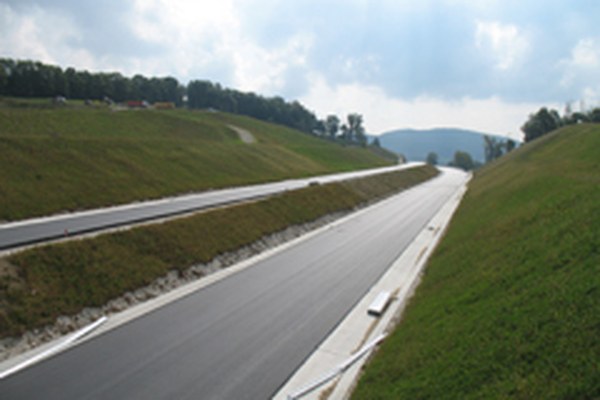
cc.alps: CIPRA demands on transport
Transport, in particular by car and truck, is one of the main causes of climate change. In the Alpine countries transport accounts for more than 25 percent of the release of greenhouse gases and is of special importance in the increase of these gases since 1990. A wrong development, running counter to the political objective to reduce exhaust emissions. In the Alps, the percentage of journeys made by car is higher than European average.
cc.alps: CIPRA Demands on Nature Protection
When climate changes, nature feels it. Mountain areas are particularly sensitive, and the greatest losses in terms of plant and animal species may occur precisely there. According to scientific estimates, almost every second plant species in the Alps is threatened with extinc-tion by 2100. For the flora with the highest number of varieties in Central Europe this would be an enormous loss. Because of global warming, also well-known animal species such as the Alpine ibex, the snow grouse and the mountain hare will experience far worse living con-ditions in the Alps.
cc.alps: CIPRA Demands on Energy
In order to limit global warming, first of all it is important that we use energy more efficiently. Yet this will not be enough for operating in a way that climate can sustain. We must radically change our energy consumption and our consumption of energy-intensive goods and services. Experience shows that consumption only goes down when clear political signals are sent - which include legislative initiatives, rewarding energy saving and punishing waste. The switch from fossil to renewable energies must be forced - but not to the detriment of nature. Biomass production, the installation of wind power turbines and new hydroelectric power stations in the Alps hide many potential conflicts. The environmental, social and economic consequences of climate projects must be carefully assessed and compared.
Resolution of Bolzano
"During this conference CIPRA expressed its strong expectations with regard to the outcome of the 15th Conference of the Contracting Parties of the United Nations Framework Convention on Climate Change, to be held in Copenhagen in December 2009. Further more, CIPRA calls upon the governments of the Alpine countries and upon those of the main industrialised countries, to show extraordinary commitment to achieve a distinct acceleration in climate change prevention policies at the global meeting in Copenhagen, in the light of new evidence and the confirmation of the seriousness of the phenomenon."
Action Plan on Climate Change in the Alps
The Action Plan following the Ministers' Declaration of Alpbach rests on the joint commitments taken by the Alpine countries which fall under the Framework Convention on climate change and the Kyoto Protocol. This Action Plan is part of the ongoing discussions to reach a comprehensive and ambitious post-2012 agreement and takes into account the commitments made in this regard by the European Union. Its aim is to go beyond the general framework to offer concrete measures that are specific to the Alps by promoting, both in terms of mitigation and adaptation, themes and measures that could be the subject of regional co-operations in the frame of the Alpine Convention, and by taking into account actions that are already in place on a national, regional and local level. The Action Plan on Climate contributes to both the global effort aiming at reducing greenhouse effect following international commitments by the Contracting Parties and to the quality of life of Alpine populations for present and future generations.
Factsheet to the „Eurovignette III“
The International Commission for the Protection of the Alps (CIPRA International) very much welcomes the fact that the EU now intends to set a course that reflects the true costs of transport and is taking a first step by amending Directive 2006/38/EC ("Eurovignette III"). The Directive must also relieve the burden on the Alpine region, which is particularly sensitive ecologically and whose population has to bear particularly high external costs; it must also contribute more to sustainability in freight transport. One important step is a sound directive on transport infrastructure costs, i.e. one that includes the efficient and consistent allocation of all relevant costs. Everyone stands to benefit from its success: the population, with a healthier, safer and better quality of life, and the transport industry, with more reliable transit routes. Indeed, the risks affect the local population as much as they affect those travelling through.
Schaan Memorandum on the Future in the Alps
The future belongs to those who shape it. In the Alps countless initiatives involving thousands of activists are working to do just that. Yet many are unaware of the fact that elsewhere other people are working on precisely the same problems as they are. This is where the Future in the Alps, a project launched by CIPRA, the International Commission for the Protection of the Alps, comes into play. The scope of the project is to collect practical experience throughout the Alps, classify it and make it available to those who need it. It consists of a phase of collating knowledge and good projects, called alpKnowhow, a phase of processing and disseminating it, called alpService, and an implementation phase, called alpPerformance. CIPRA itself is not a research body, nor is it an educational institution; it is a non-governmental organisation, so it is mainly concerned with the questions of what the results of alpKnowhow mean politically and what demands can be derived from these results. To answer these questions CIPRA representatives from seven countries convened in Schaan/Liechtenstein on 8 and 9 December 2006. The demands and political conclusions on all topics are set out in the present Schaan Memorandum on the Future in the Alps.
Resolution: Climate Protection and Climate Change Adaptation Strategies
The Alpine region is particularly affected by global climate changes, many of which are the result of man’s impact. The Alps are a particularly sensitive region and are affected all the more by the forecast changes such as the rise in annual average temperatures, the increase in extreme meteorological events, summer droughts and melting glaciers. It is CIPRA’s view that climate change represents one of the 21st century’s greatest challenges. Given the above it calls upon the European Union, the bodies of the Alpine Convention, all the Alpine states, the federal provinces, regions and cantons as well as all governmental and non-governmental authorities .. to intensify their climate protection efforts in order to reduce the greenhouse effect; .. to draw up sustainable strategies for dealing with the growing repercussions of climate change.
Resolution on the role of local government and administration in sustainable development
At a conference on the Role of Local Governments and Administrations in Sustainable Development held in 2005, representatives of the mountain regions of Central Asia, the Caucasus, the Carpathians, the Alps, the Altai and Mongolia adopted a resolution with recommendations aimed at managers involved in the development of mountain areas. In it they called for an exchange of positive experience between different mountain regions, education in sustainable development as a condition for active participation, and also for research and the transfer of technology and methodology. The resolution also contains concrete recommendations on decentralisation and reliable dialogue structures as a basis for sustainable development, sustainable economic development, and the role of local governance in the management of natural resources. It also underscores the importance of information and the role of women in sustainable development. Finally it sets out conditions for the effectiveness of alliances and conventions.
Declaration on protected areas in European mountain regions, Chambéry 2002
The Declaration on Protected Areas in European Mountain Regions emphasises the significance of biological and geological resources and water reserves in mountain regions. It stresses the necessity of targeted development and conservation measures as well as regional co-operation. Protected areas can serve as an experimental field for the development of conservation measures. Concrete steps proposed for the period 2003-2005 include the creation, in each European massif, of a mountain co-operation committee with representatives of governmental and non-governmental organisations. One of the tasks of the committees is to help disseminate information about models and methods to implement nature conservation and to transfer knowledge from research to improve the management of protected areas and sustainable development. Other important factors include encouraging partnerships, networks and joint projects as well as developing strategies for the active participation of populations.
Friends-of-Nature Wildhaus Declaration: tourism and sustainability in the 21st century
Tourism needs an intact natural environment, a vibrant cultural life, and a fair partnership between visitors and visited. As an economic sector, tourism is directly dependent on sustainability. The Declaration calls upon the tourism industry, the tourism regions, governments and individual tourists to curb the consumption of natural resources and reduce the burden of traffic caused by tourism traffic. It also calls on tourism to contribute towards eliminating poverty and to implement a sustainable destination and transport policy for the environment.
Berchtesgaden Declaration on regional co-operation in mountain regions 2002
At the end of June 2002 a conference on international co-operation between the mountain regions of the world was held in Berchtesgaden. The participants at the conference presented ten fundamental principles for regional co-operation. The principles underscore the key responsibility of governments and the need for regional co-operation to ensure the sustainable and proper management of mountain regions. Equal rights, decentralisation and the involvement of resident populations are essential in achieving sustainable development. Measures aimed at establishing cross-border partnerships and networks for the exchange of experience and the dissemination of knowledge are of crucial importance in bringing regional co-operation to life. The Declaration is aimed at governments, the international community, the private sector and NGOs.